
Are you looking for a fun way to teach your students how to play piano with feeling?
We’ve recently created an activity that might be just what you need. It’s called “Play The Emoji” Card, and it helps students explore how dynamics, articulation, tempo, and phrasing can convey emotion in music.
With “Play The Emoji” Cards, students can express themselves through music in a playful and imaginative way. They’ll develop a deeper understanding of musical expression by connecting emotions to their piano pieces. This not only enhances their performances but also keeps them motivated and excited about their lessons.
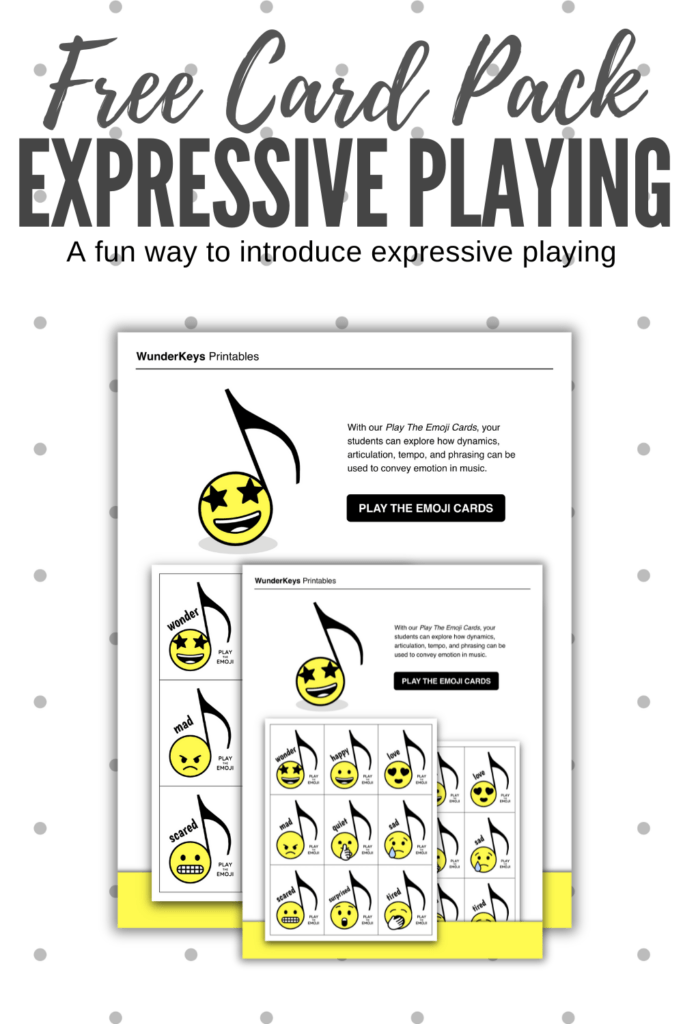
“Play The Emoji” Cards: How To Play With Feeling
Imagine your students performing their favorite pieces with genuine feeling.
Your students will find more joy in practicing, take pride in their performances, and be eager to continue their musical journey. This emotional engagement is essential for keeping them enrolled in and excited about piano for years to come.
Download the file at the bottom of the post and use the instructions below to give “Play The Emoji” Cards a try. Then, watch your students learn to play piano with feeling!
Here’s How It Works
1. Start Simple: First, have your student play their piece focusing only on the notes and rhythm. Ignore dynamics, articulation, tempo, and phrasing for now.
2. Draw an Emoji: Next, your student draws a “Play The Emoji” Card from the deck. Each card features a music note adorned with an emoji face.
3. Play with Emotion: Finally, your student plays their piece again, this time trying to convey the emotion shown on the “Play The Emoji” Card.
To convey emotion in a piece, piano students can utilize various theory elements that enhance expressive playing. Here are some key theory elements:
Dynamics: Variations in volume (piano, forte, crescendo, diminuendo) help convey intensity and emotion. Softer dynamics can suggest tenderness or melancholy, while louder dynamics can express joy or anger.
Tempo: The speed of a piece affects its mood. A slower tempo might convey sadness or calmness, while a faster tempo can create excitement or urgency.
Articulation: How notes are played (staccato, legato, accents) contributes to emotional expression. Legato playing can create a smooth, flowing feeling, while staccato can add a playful or sharp quality.
Phrasing: Grouping notes into musical phrases and shaping those phrases with dynamics and articulation helps to tell a musical story and add emotional depth.
While there are many additional ways to convey emotion, for most of your students this is a great start!
Before You Download Today’s Resource
Our “Play The Emoji” Cards are perfect for young piano students. But teenagers may need different tools when learning to convey emotion through music.
And often, the perfect tool is the perfect resource!
The teen piano books in Andrea and Trevor Dow’s Very Useful Piano Library use powerful piano pieces to tell popular tales and turn regular piano lessons into unforgettable experiences.
Playing with emotion becomes automatic when your students are playing from:
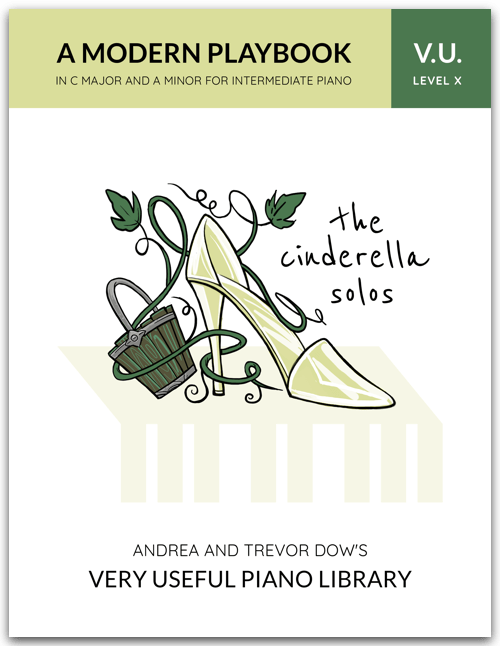
- The Cinderella Solos (Cinderella In C Major and A Minor)
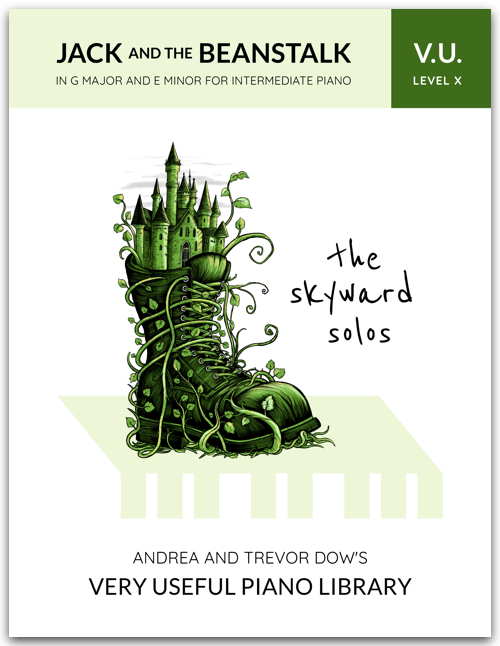
- The Skyward Solos (Jack and the Beanstalk In G Major and E Minor)
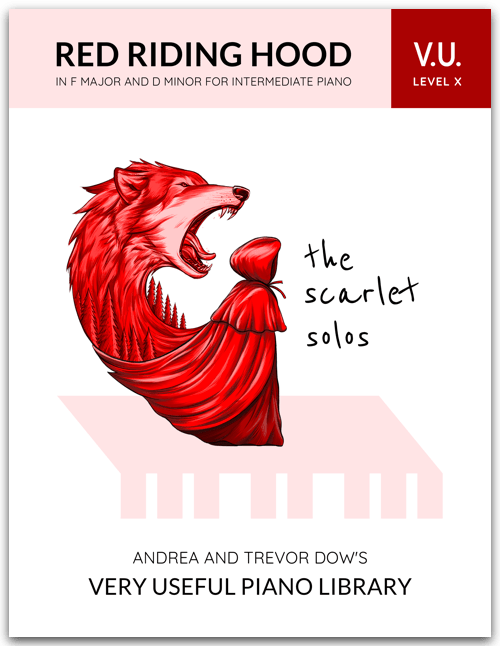
- The Scarlet Solos (Red Riding Hood In F Major and D Minor)
Click on a cover below to learn more about each book:
Download Our “Play The Emoji” Cards
Click here or on the image below to download our “Play The Emoji” Cards from the Teach Piano Today Homework Pages and help your students learn how to play piano with feeling.
Remember to enter the password found in bold in the email you received today.
Not yet a member? Want access to this printable and more? Join here.
