
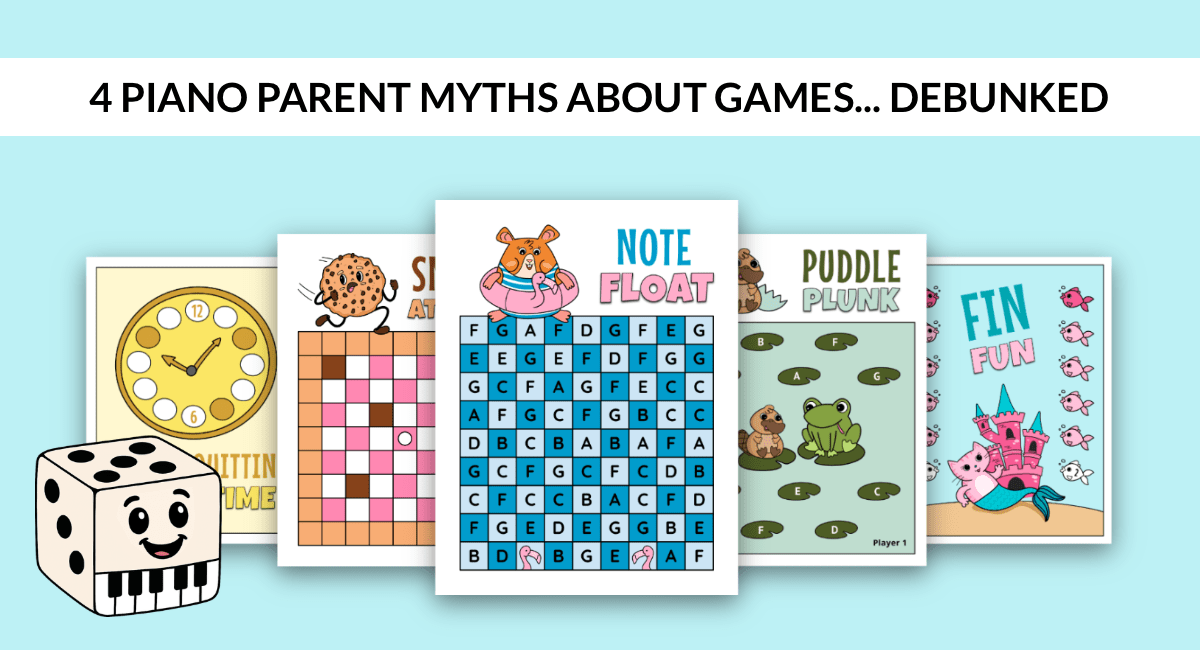
How to Respond With Confidence—and a Piano Game Pack That Makes It Easy
Let’s face it—kids love games. And when used with intention, piano games can turn tricky concepts into lightbulb moments, keep students motivated, and make lessons the highlight of their week.
But every now and then, a parent raises an eyebrow.
“We’re paying for piano lessons, not playtime.”
“Is this really necessary?”
Most parents are completely on board with games once they understand the why. But if you’ve ever faced hesitation—or want to head it off before it starts—this post will give you the words and confidence to do it with ease.
Because here’s the thing:
In today’s piano world, games aren’t just accepted… they’re expected. Parents talk. Students compare. And off-the-bench activities are quickly becoming a hallmark of engaging, effective teaching.
This post will help you respond with confidence, kindness, and clarity.
Want a game resource that’s built for success—and built to reassure parents too?
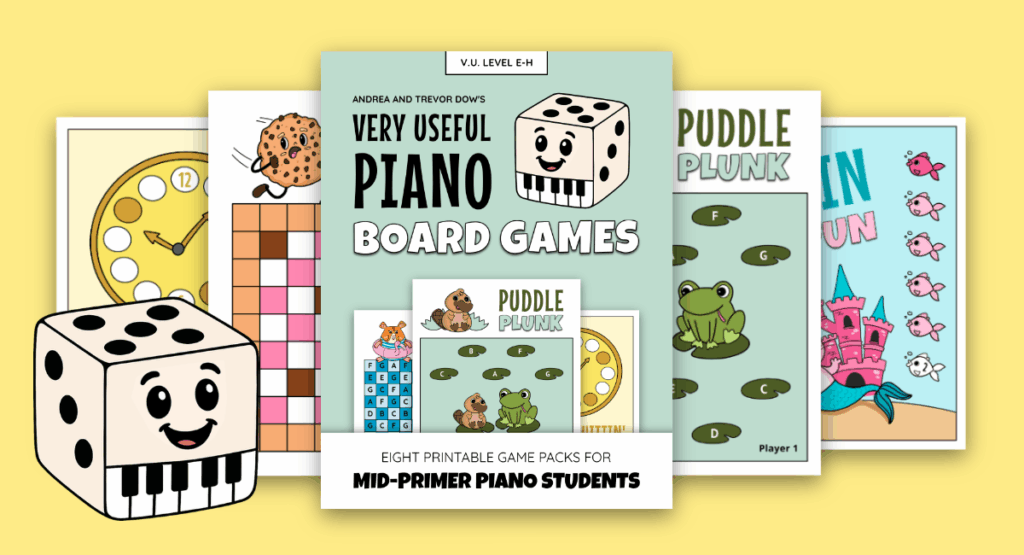
Andrea and Trevor Dow’s Very Useful Piano Board Games (Mid-Primer Edition) is curriculum-aligned, parent-approved, and designed to make your teaching style easy to understand (and love).
Click here for a detailed look at all of the games in this pack!
4 Piano Parent Myths About Games… Debunked
Each myth below includes a realistic concern, a peek into why parents may think this way, and the words you can use to set them at ease.
🎯 Myth 1: “It’s a waste of valuable lesson time.”
Realistic parent wording:
“I’m paying for piano lessons—shouldn’t that time be spent on the piano?”
Why they might believe this:
They associate value with hands-on playing and don’t see how off-bench activities connect to progress.
Teacher’s perspective:
Games reinforce core skills that save time in the long run. They reduce the need for constant reteaching and help students move through material more confidently.
What to say:
“The games I use are curriculum-aligned and target exactly what we’re working on. They help students absorb concepts faster—which means we spend less time reviewing and more time progressing.”
🎯 Myth 2: “My child won’t take piano seriously if it feels like play.”
Realistic parent wording:
“I’m worried this will make them think piano isn’t something they need to work at.”
Why they might believe this:
They associate fun with a lack of discipline or rigor.
Teacher’s perspective:
Games build confidence and engagement, which encourages students to stick with piano longer—and take ownership of their learning.
What to say:
“Actually, games boost student investment. When kids feel confident and engaged, they’re more likely to practice, stick with lessons, and take pride in their progress.”
🎯 Myth 3: “I didn’t learn piano this way—why should my child?”
Realistic parent wording:
“When I learned piano, it was all bench work and drills—and it worked fine for me.”
Why they might believe this:
They’re comparing your methods to their own childhood experience and may be skeptical of new strategies.
Teacher’s perspective:
We now have research-backed strategies that improve learning outcomes—games included. Today’s kids learn best with variety and movement.
What to say:
“That’s true—it is a more modern approach. But we now know that students learn better when they’re actively engaged. These games aren’t fluff—they’re rooted in current educational research.”
🎯 Myth 4: “Games make lessons feel unstructured or chaotic.”
Realistic parent wording:
“This doesn’t look like a focused lesson. Isn’t structure important?”
Why they might believe this:
They associate order and quiet with productivity.
Teacher’s perspective:
Games are structured—they just don’t look like traditional instruction. They still require focus, turn-taking, accuracy, and goal-setting.
What to say:
“These activities may look different from traditional lessons, but they’re actually full of structure. Students follow rules, concentrate, and work toward specific musical goals the whole time.”
Want a resource that makes this easy to implement and easy to explain?
Andrea and Trevor Dow’s Very Useful Piano Board Games (Mid-Primer Edition) is curriculum-aligned, fast to prep, and designed to help kids learn while keeping parents confidently on board.
Click here or on the image below to learn more.
Our Final Thought On Piano Games
These days, engaging lesson formats with game-based learning aren’t the exception—they’re what today’s students (and parents) are looking for.
You won’t hear concerns from every parent—but when you do, it helps to be ready. A calm, confident explanation goes a long way in building trust, strengthening relationships, and reinforcing your role as an expert.
So don’t back down. Trust your teaching. And let the games do what they do best: help your students learn, love, and stick with piano.