
When I first started teaching piano lessons, I had a student who I now lovingly refer to as my “little firecracker.”
We’ll call him Jake.
Jake was bright, funny, quick, curious, and completely exhausting. He had big energy, big ideas, and very little interest in sitting still long enough to follow my carefully planned lesson activities.
By the time Jake left my studio each week, the room looked like it had hosted a birthday party, a wrestling match, and a small natural disaster. Flashcards were scattered. Stickers had migrated to places stickers should never be. My piano bench was crooked, my lesson plan was abandoned, and my confidence as a brand-new piano teacher was usually somewhere under the rug.
And my mental health?
Let’s just say Jake’s lesson was the one I thought about before it happened, recovered from after it ended, and quietly dreaded all week long.
But Jake’s mom was sweet. She appreciated me. She paid on time. And because I was new, nervous, and still trying to build a studio, I did what a lot of young piano teachers do when they are handed a challenging student.
I smiled.
I adapted.
I crossed my fingers.
And I kept teaching him.
What I didn’t know at the time was that Jake was about to teach me one of the most valuable business lessons of my first year as a piano teacher. He didn’t just help me become a better teacher for busy, energetic, hard-to-reach students. He helped me understand how one child’s success can quietly turn into studio growth, parent trust, and thousands of dollars in income I never would have earned if I had given up too soon.

How “Challenging” Piano Students Can Be Your Ticket To Piano Studio Success…
Well, Jake did not magically become easier.
In fact, for a few weeks, things got worse.
But I got wiser.
I stopped trying to make Jake fit into the tidy little piano lesson plan I had written in my notebook, and I started building lessons that could actually survive Jake.
“Merrily We Roll Along” became “Dirk the Dragon Slayer.”
Flashcards became a full-contact game of War.
Finger warm-ups became “Five Seconds To Play Like An Animal.”
And slowly, almost unbelievably, Jake started to change.
He was still loud. He was still wiggly. He was still very much Jake. But now he was engaged. He was learning. He was laughing at the piano instead of launching himself away from it.
My studio was still not exactly peaceful, but my mental health began to recover. Jake’s mom stopped apologizing at the end of every lesson. Then she started smiling. Then she started noticing.
And then she started talking.
To friends.
To neighbors.
To other moms at school.
To anyone who had a child who “might not be an easy fit” for traditional piano lessons.
And suddenly, my phone started ringing.
By the end of October, Jake’s mom had referred six new students to my piano studio. Six students I would not have had if I had written Jake off as “too difficult.” Six students whose tuition added up to an extra $4,200 in my first year of teaching.
And the best part?
All six were lovely students.
That first month with Jake was hard. Really hard. But sticking with him changed the way I taught, changed the way parents talked about my studio, and changed the way my business grew.
My most challenging piano student became my first word-of-mouth marketing machine.
Need Assistance With Difficult Students? Read On…
How To Teach Piano To Lions and Tigers and Bears, Oh My!
How To Teach Piano To “Anthony Ants In His Pants”
How To Teach Piano in 84 Seconds
How Do I Deal With Difficult Students Today?
The same way I did when I started… by working ferociously to discover their interests and applying those interests to my piano teaching. Along the way, we have created some tremendous materials that have tamed the wildest of beasts…
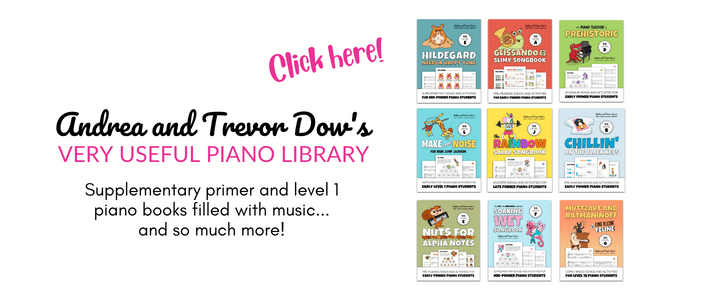
Are you looking for a secret weapon that will capture the attention of even your most challenging piano students? If so, check out The Very Useful Piano Library – a huge micro-levelled library of thematic books kids love, designed to boost their skills in a scaffolded, frustration-free way.
It’s amazing how well that works, isn’t it? I’ve just started teaching- I taught my first lesson about three months ago. I have just two students, since I’m still in high school and have another job as well, so I have time to make it interesting. For learning rhythm, note names, and staff notes I made a board game that works with cards like Candy Land. To learn rhythm we had a sort of “Red light green light” game using flash cards. This week I wrote an elementary version of the Doctor Who theme to teach new timing and notes. Transcribing their favorite songs is very easy, and gives them something to work on that they’re thrilled to learn. Besides, it’s fun. 🙂