
When I was a young piano student, I would choose repertoire based on what looked the “least scary”.
My criteria? No more than two sharps or flats in the key signature and NO ledger lines.
Looking back, I realize that my reluctance to play music that looked visually complicated was a real shame; I missed out on many beautiful pieces!
So, when I became a piano teacher I made it my mission to ensure that my students would not have to choose repertoire based on a fear of ledger lines, key signatures, or accidentals.
And, as publishers of piano education materials, Trevor and I are continuing this mission by giving teachers and students printables that build the skills needed to tackle any score.
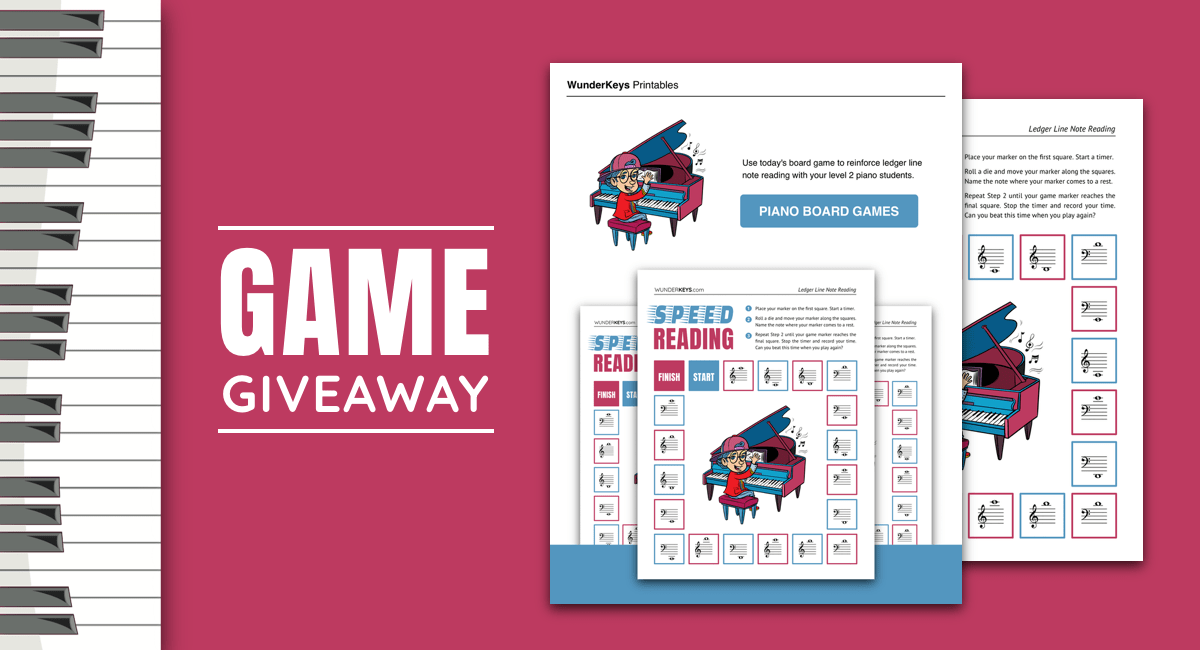
So, at the bottom of today’s post, we’re sharing a ledger line note board game for your late elementary piano students.

Why Ledger Lines Are Such A Problem
If you open a piece in any student’s late elementary method book, you’ll almost certainly see note names penciled in above or below the ledger lines.
Ledger line note reading commonly trips up piano students as they travel the path to intermediate repertoire. At this point in their studies, there is so much to learn that it just seems easier to write in a note name and carry on.
But what is it that makes reading ledger line notes such a challenge? Why are they such a speed bump?
There are several reasons…
1. Once students have mastered note reading on the grand staff, method books tend to move away from note reading and into other skills. When ledger lines appear in future music, any purposeful teaching of note reading is long gone.
2. Students typically encounter ledger line notes when they are a bit older and therefore are less likely to be playing piano games to reinforce note reading skills. Regular opportunities for note reading drills are not always a part of their piano lesson routines.
3. Ledger line notes are used sparingly in late elementary piano music. While they may show up in a “ledger line focus” piece, they aren’t always incorporated into method book music in a systematic way at the elementary level.
All of these things combine to produce piano students who don’t have the regular practice they need to read ledger line notes confidently…
Unless they use WunderKeys Method Books!
In our books, we have addressed all of these issues to ensure that ledger line note reading is as comfortable as note reading on the grand staff.
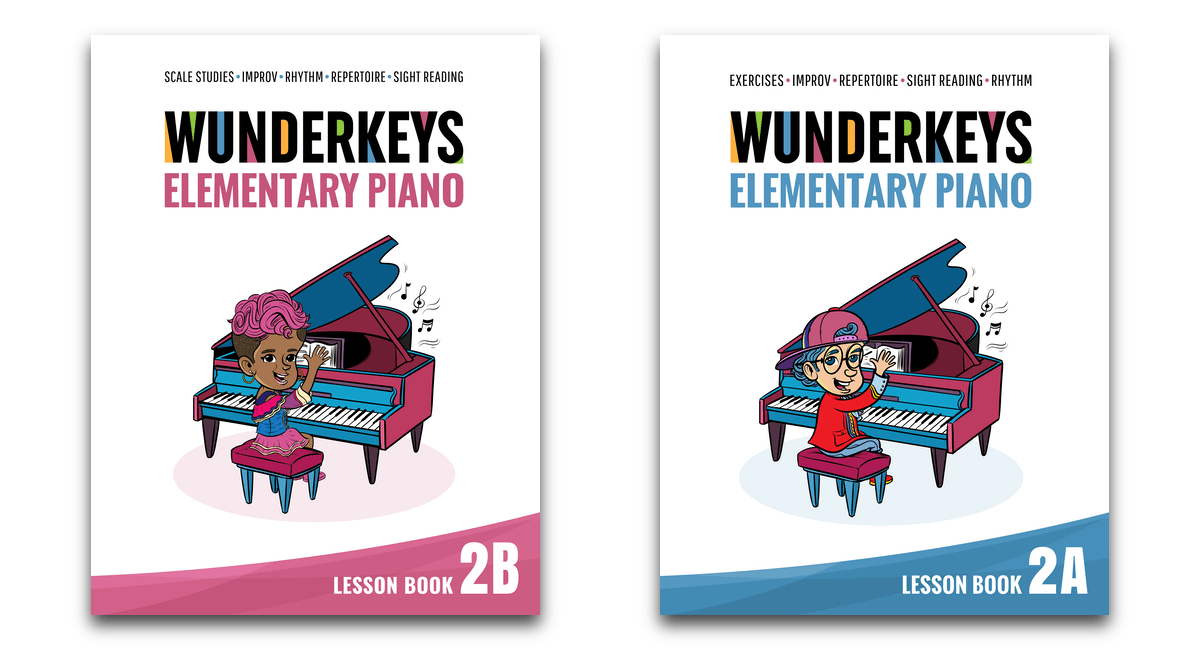
We introduce ledger lines early. Instead of only focusing on hand positions that are contained within the grand staff, we introduce pentascales in WunderKeys Elementary Piano Level 2A and one-octave scales in WunderKeys Elementary Piano Level 2B that move beyond the grand staff into ledger lines.
Early exposure means more practice and more comfort.
We also include lots of opportunities for practicing ledger line notes in our books through sight reading, technical exercises, and repertoire. This means that students are regularly exposed to them in a way that is natural and in context.
If you’re ready to take your elementary piano students through a book that boosts ALL of their skills in a purposeful way, check out our WunderKeys Elementary Piano Level 2 Program below.
Click here to check out WunderKeys Elementary Piano Level 2A.
Click here to check out WunderKeys Elementary Piano Level 2B.
Download Today’s Ledger Line Note Board Game
Click here or on the image below to download our Speed Reading Ledger Line Note Board Game.
For more FREE piano printables, be sure to check out all that we have to offer here on our WunderKeys website.
Leave A Comment